

I reckon the market has shifted lately. Everyone wants a Zillow killer, but nobody wants to pay the Zillow price tag. I have seen founders lose their shirts because they ignored the actual real estate app development cost early on.
It is not just about the code anymore. We are talking about data feeds, legal compliance, and AI models that actually work. If you think $20k gets you a finished product, I have a bridge in Sydney to sell you.
The Real Price of Entry in 2026
The starting point for any project is usually a reality check. In 2026, the baseline has moved up. Basic apps now require more polish just to compete in the crowded app stores. Users have zero patience for slow interfaces.
You might be wondering why prices vary so much. It comes down to the depth of the features you choose. A simple listing app is one thing. A full scale marketplace with virtual tours and smart contracts is a different beast entirely.
Minimum Viable Product vs Full Scale
A Minimum Viable Product (MVP) is your first hurdle. Right now, a basic real estate MVP costs between $45,000 and $75,000. This gets you user profiles, basic search, and a few property listings. It is tidy but basic.
Plot twist. Most founders realize their MVP is too light for the 2026 market. To actually get traction, you need at least one "wow" feature. Adding high end filters or map integrations can quickly push that bill toward $100,000.
Hidden Maintenance Fees You Will Hate
Don't forget the ongoing costs. I have seen tidy projects fail because the owner forgot about server bills. Maintenance usually eats about 20% of your initial development budget every single year. That is a hella big chunk.
You have to pay for API access too. Fetching real time property data from MLS feeds is not free. These subscriptions can cost hundreds or thousands a month. It is a proper drain on your monthly cash flow if you aren't ready.
Think about it this way. If you spend $100,000 on the build, expect to pay $20,000 a year just to keep the lights on. This includes security updates and bug fixes. Skipping this is the fastest way to get 1 star reviews.
If you are looking for a team that gets the texas vibe, check out this mobile app development texas to see how local experts handle these complex builds. They understand the specific regulatory hurdles in the US market.
Tech Stacks That Drain or Save Cash
Choosing your tech stack is like picking a car engine. Some are cheap to buy but expensive to fix. Others cost more upfront but save you heaps of trouble later. In 2026, the choices are more fragmented than ever.
I might be wrong on this but I think native development is becoming a luxury. Unless you need extreme performance for 3D rendering, cross platform tools are winning. They let you build once for both iOS and Android.
Why Flutter Beats Native Right Now
Flutter has become the gold standard for real estate apps lately. It allows for beautiful UI that feels smooth on any device. Best of all, it can cut your real estate app development cost by nearly 30% compared to native.
Writing two separate codebases is just too pricey for most startups. With Flutter, you have one team instead of two. This reduces communication overhead and makes bug squashing much faster. It is pure dead brilliant for saving cash.
AI Integration Costs are Getting Messy
Everyone wants AI in 2026. Whether it is a chatbot or a price predictor, it adds a layer of complexity. Training custom models is expensive. Most people should just use existing APIs to keep costs down.
Integrating a basic GPT-4 powered assistant might add $5,000 to your build. However, building a custom neural network for property valuations could cost $50,000 alone. Stick with off the shelf solutions unless you have VC funding.
"The cost of building a marketplace isn't just the code; it's the liquidity and the data integrity. You're paying for trust as much as features." — Andrew Chen, General Partner at a16z,Factors Busting Your Property App Budget
Your location and your team’s location are the biggest price drivers. I've worked with teams all over the world. The price difference between a dev in San Francisco and one in Warsaw is staggering.
But wait. Cheap code often ends up being the most expensive code you ever buy. I have seen "canny" founders hire the cheapest freelancers only to spend double later to fix the mess. Quality has a floor price.
Regional Rates and Global Talent
Developer rates are all over the place. In the US, you might pay $150 per hour. In Eastern Europe, that drops to $60. In Southeast Asia, it could be $30. Each comes with its own set of communication risks.
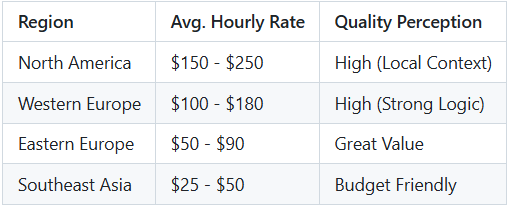
Choosing a team is about more than just the rate. You need someone who understands the local property market. A developer who doesn't know what an escrow is will struggle to build a transaction engine.
Security Features That Actually Matter
Data breaches in real estate are a nightmare. You are handling sensitive financial info and home addresses. In 2026, basic encryption isn't enough. You need multi factor authentication and biometric logins as a standard.
These security layers add time to the build. Expect to spend at least $10,000 specifically on hardening your app. It sounds like a lot until you consider the cost of a lawsuit or a total data leak.
"AI is going to change how we value homes, but the initial investment in that data science is a massive barrier for small players." — Brendan Wallace, Co-Founder of Fifth WallCalculating Your Return on Investment
So what does that mean for you? You aren't just spending money; you are buying an asset. If your app saves a broker ten hours a week, it pays for itself. You have to look at the long game.
I've seen apps that look lush but make zero money. That is a failure. You need a monetization plan before the first line of code is written. Otherwise, you are just funding a very expensive hobby.
Monetization Strategies for Modern Apps
Most real estate apps make money through lead generation. You connect a buyer to a lender or an agent. You take a cut. In 2026, subscription models for premium listings are also becoming quite popular.
Advertising is another path, but it can ruin the user experience. I reckon it is better to charge for value. Feature a property at the top of search results for a fee. It is a proven model that works.
Future Proofing Against 2027 Tech
The tech world moves fast. Right now, we are looking at AR glasses and spatial computing. If your app isn't built with modular code, it will be obsolete by 2027. This is the kicker for many.
Spending a bit more now on a "bostin" architecture saves you from a total rewrite later. Use modern frameworks. Keep your documentation tidy. It makes your app much more attractive if you ever decide to sell the company.
Why You Might Get Bitten by Cheap Quotes
Let me explain the trap. A dev agency promises you the world for $15,000. They use a cookie cutter template that was old three years ago. You launch, and the app crashes the moment ten people join.
Actually, scratch that. It usually crashes during the demo with your biggest investor. Cheap quotes often hide a lack of testing. Testing is where the real quality happens, and it takes time and money.
The Quality Debt Trap
Quality debt is like a high interest credit card. You save money today by skipping code reviews. Next month, you pay for it when a simple update breaks the entire login system. It is a miserable cycle.
I suggest setting aside 15% of your budget just for Quality Assurance. This means professional testers trying to break your app on every possible device. It is not exciting work, but it is proper essential for success.
Scalability Woes in 2026
If your app goes viral, can your servers handle it? Scalable architecture costs more to set up. You need load balancers and cloud databases that grow with your user base. It is a "braw" feeling when it works.
However, if you build on a cheap, rigid server, your app will fold under pressure. This is why the real estate app development cost includes a premium for cloud experts. They make sure you don't disappear when you finally get famous.
Future Outlook: PropTech in 2028 and Beyond
Looking ahead, the market for property tech is fixin' to explode. Recent reports suggest the global PropTech market will reach nearly $65 billion by 2028. This represents a massive opportunity for anyone starting today.
What this means for you is simple. The competition will get tougher, but the rewards will get bigger. If you build a solid foundation now, you will be ahead of the curve when the next tech wave hits.
Not gonna lie, it's a tough road. But if you focus on solving a real problem rather than just chasing a trend, you'll do alright. Just keep an eye on those API costs and don't skimp on the security.
"The real estate industry has been slow to change, but we are finally seeing a digital-first approach to buying and selling homes." — Glenn Kelman, CEO of Redfin,Building a successful product takes more than just a big check. It takes a clear vision and a team that isn't afraid to tell you when your idea is a bit "sus". Stick to your guns and keep the user first.
Your total real estate app development cost will likely fall between $60,000 and $150,000 for a serious entry. It is a big range, but that is the reality of software in 2026. Good luck out there, mate.
Frequently Asked Questions
Q: How long does it take to build a real estate app in 2026?
A: Most professional builds take between four and eight months. This includes the planning phase, design, development, and thorough testing. Attempting to rush this often leads to poor code quality and major bugs.
Q: Can I build a property app for under $30,000?
A: It is very difficult to build a custom, secure app for that price. You might get a very basic prototype, but it won't be ready for the public. Expect to spend more for a market ready product.
Q: Which features are most expensive in a real estate app?
A: Advanced AI for price predictions and real time 3D virtual tours are the most costly. Map integrations and secure payment gateways also add significant time and expense to the project.
Q: Should I hire a local team or an offshore team for development?
A: Local teams offer better communication and market understanding but cost more. Offshore teams save money but require more management. Many successful founders use a hybrid approach to balance quality and price.
